
Registration is now open for this year's LibreFest! Join us virtually the week of July 13.

Register here
Dev LibreTexts

3.22: Chromatophores

  • Page ID
    4261
  • Chromatophores are irregularly shaped, pigment-containing cells. If the pigment is melanin, they are called melanophores. Chromatophores are common in crustaceans, cephalopod mollusks, lizards and amphibians, and some fishes.
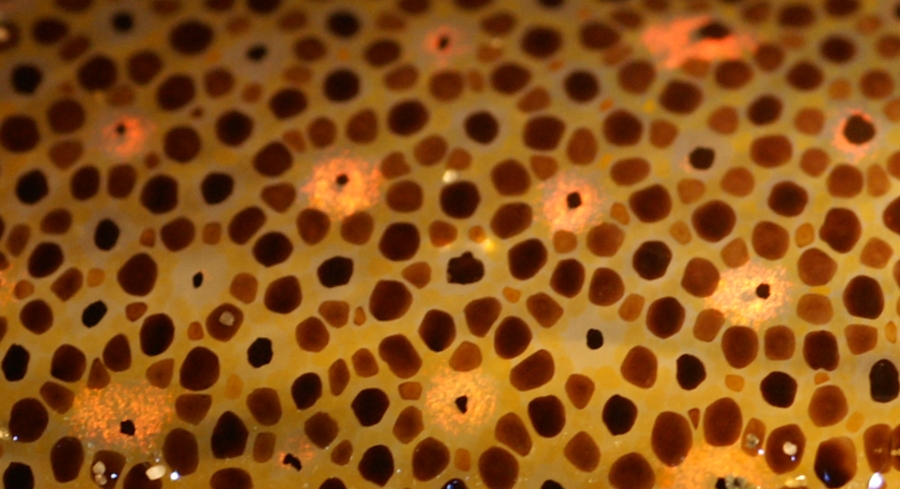
    Close-up of a colorful animal skin pattern with an array of small, irregular dark spots on a bright, textured background.
    Figure 3.22.1: Chromatophores in the skin of a squid. (CC-By-Sa-2.0 Minette)

    Chromatophores are often used for camouflage. Figure 3.22.1 shows a winter flounder resting on a checkerboard pattern. The chromatophores of cephalopods change size (expand and contract) as a result of activity of muscle fibers and the motor neurons that terminate at them. In crustaceans and amphibians, the chromatophores have a fixed shape. Color change comes about through the dispersal (darkening) or aggregation (lightening) of granules within the cell. This is under hormonal control.
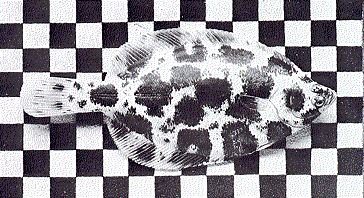
    A flatfish with a spotted pattern lies on a black and white checkerboard surface.
    Figure 3.22.2: Chromatopores of a Flounder courtesy of the Field Museum of Natural History

    This page titled 3.22: Chromatophores is shared under a CC BY 3.0 license and was authored, remixed, and/or curated by John W. Kimball via source content that was edited to the style and standards of the LibreTexts platform.

    • Was this article helpful?